

The problem
Shared expense apps solve the math but break the relationship
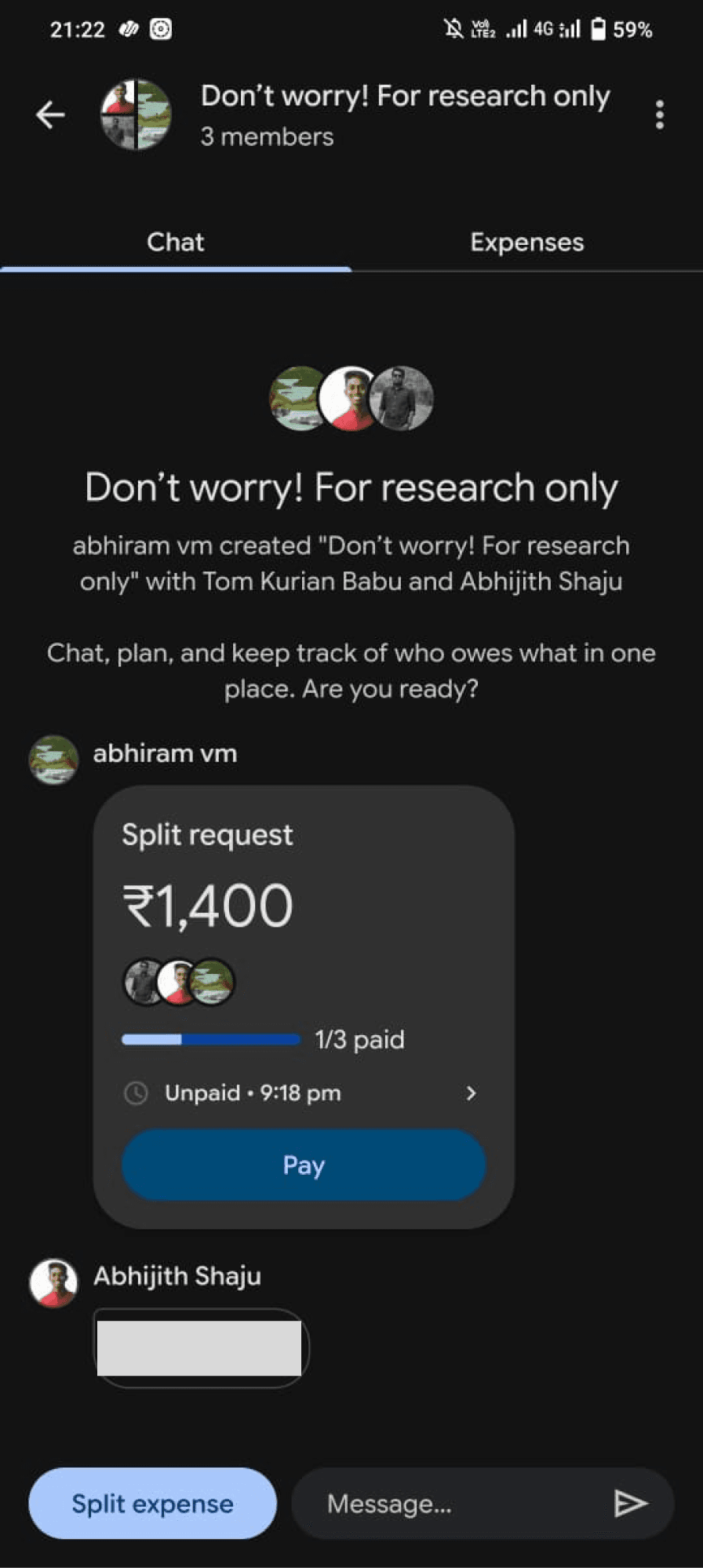
Users hesitate to log expenses because adding money to a group feels like a cheap in Indian context
Settlements get delayed until balances feel too large to ignore, leading to uncomfortable conversations
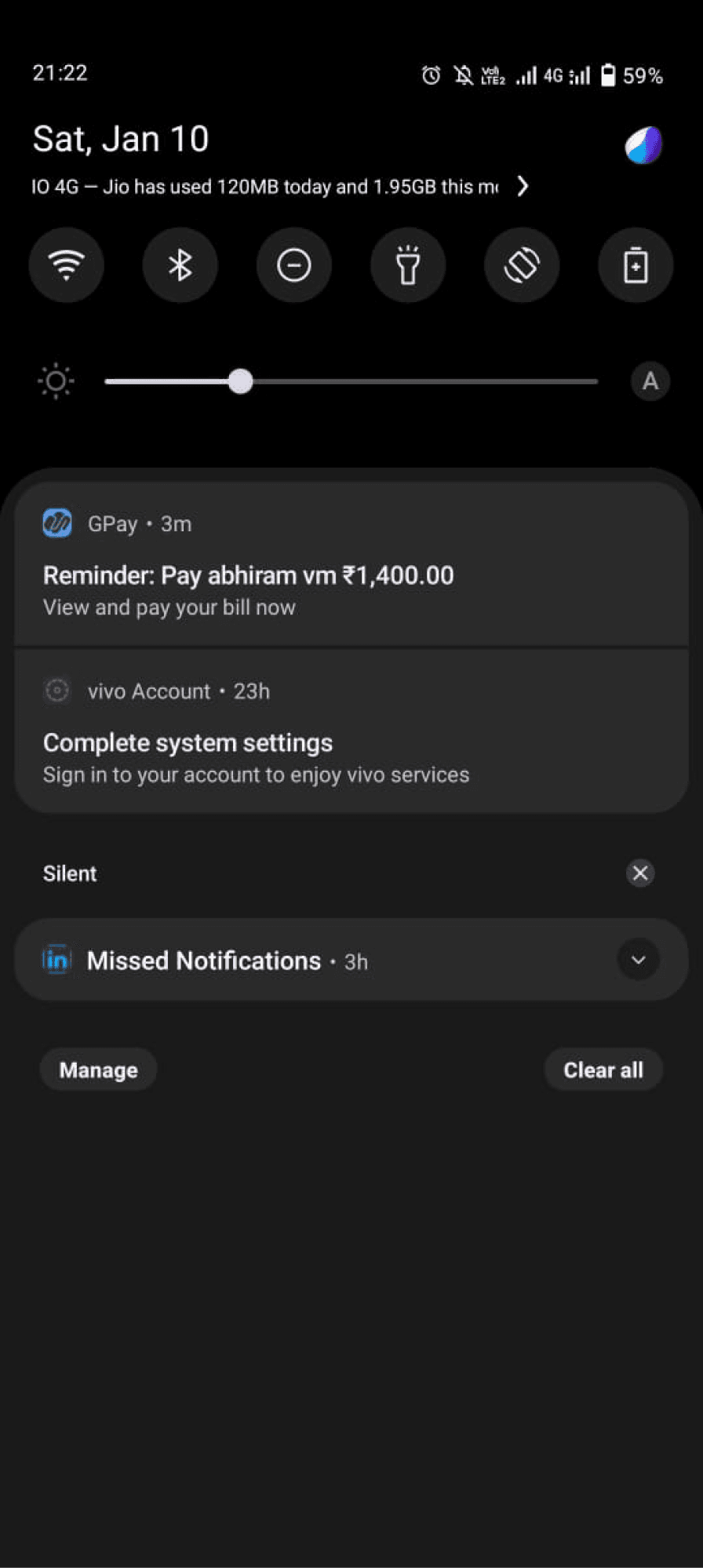
Notifications read as personal callouts, not neutral updates — making the payer feel like a debt collector
The context
Three moments where Google Pay makes things awkward
Solution
Make it feel like the group is handling this together
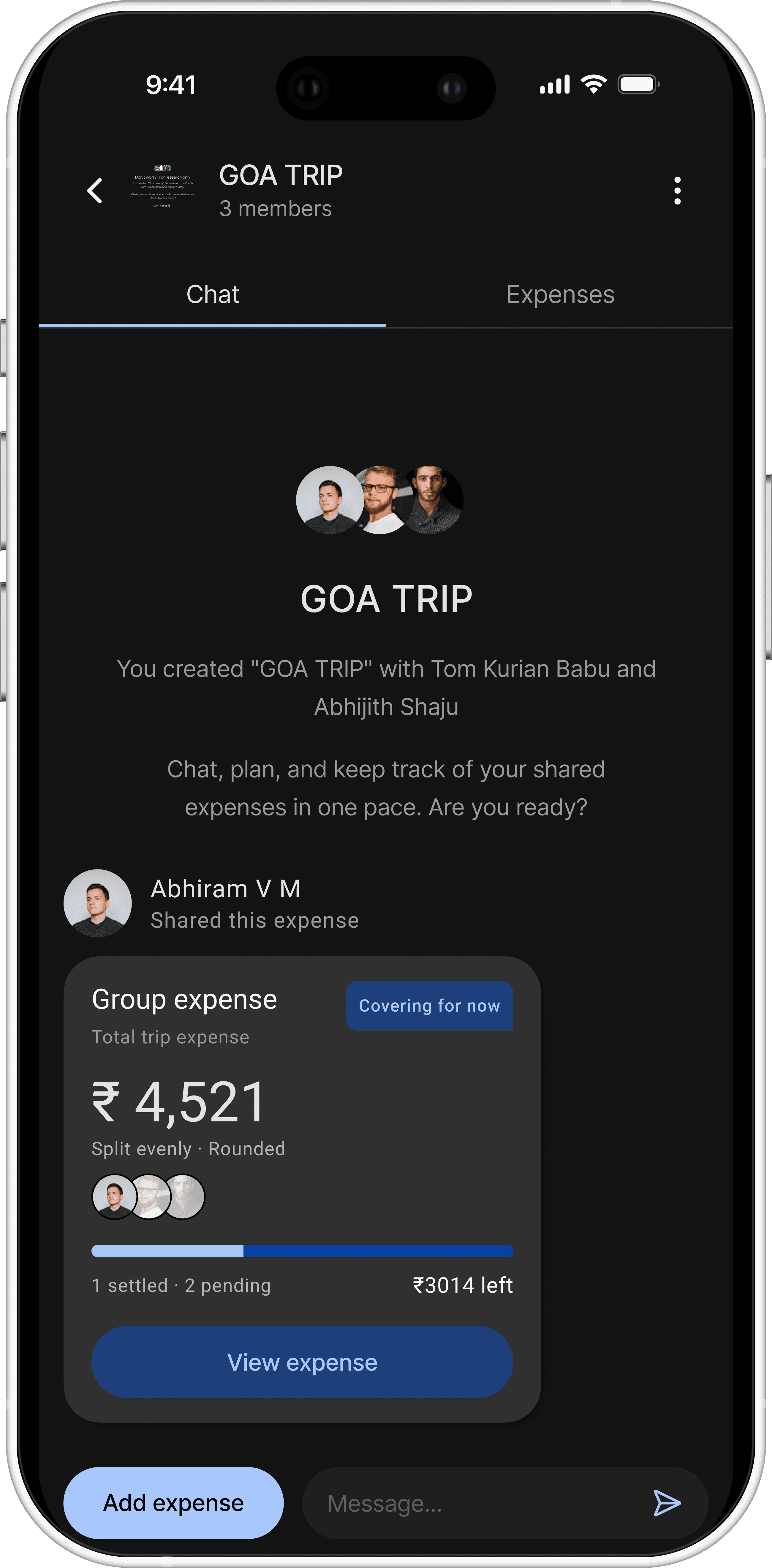
The problem was never the math. It was how the whole thing felt. Three changes, one idea behind all of them.
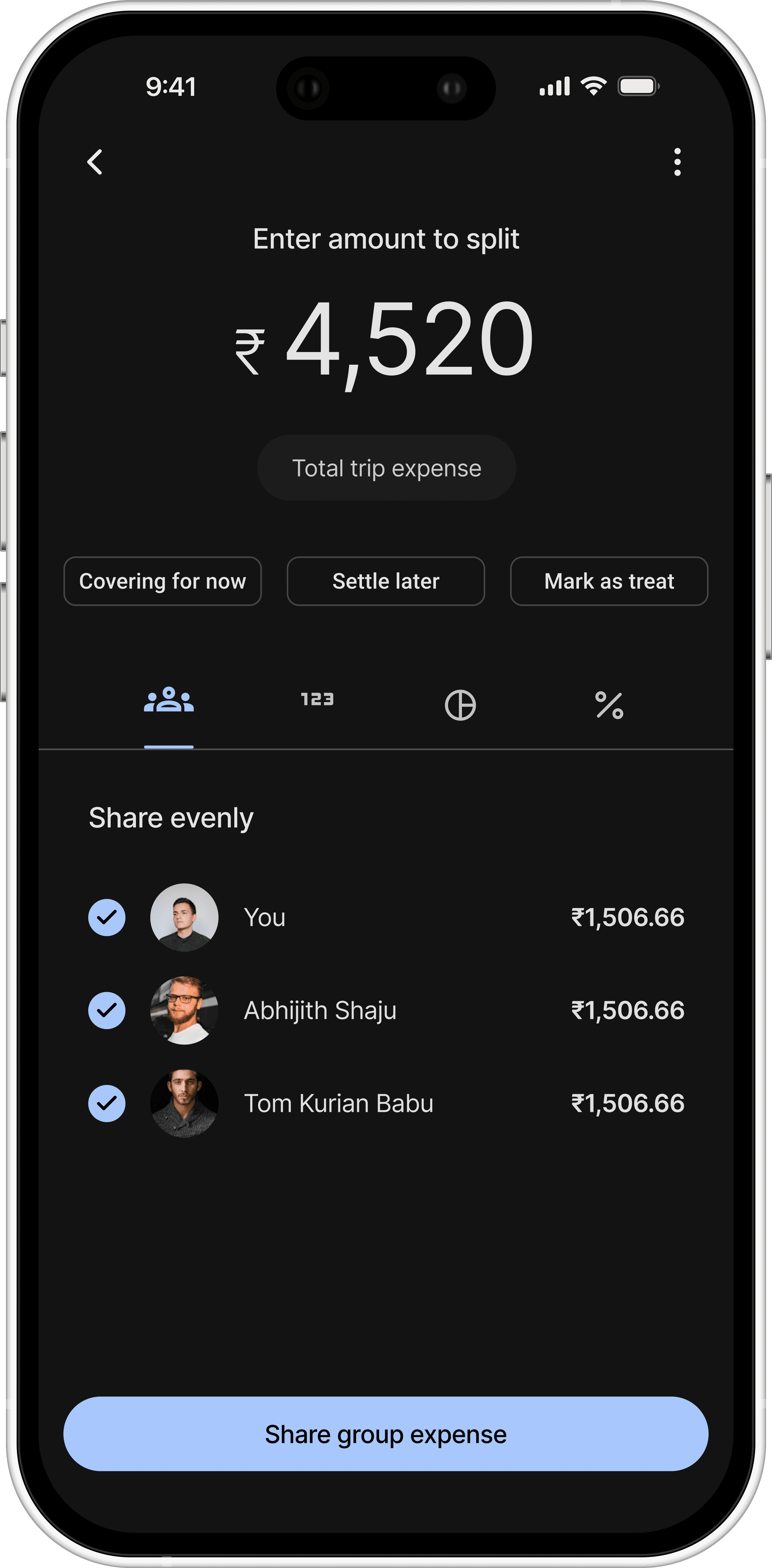
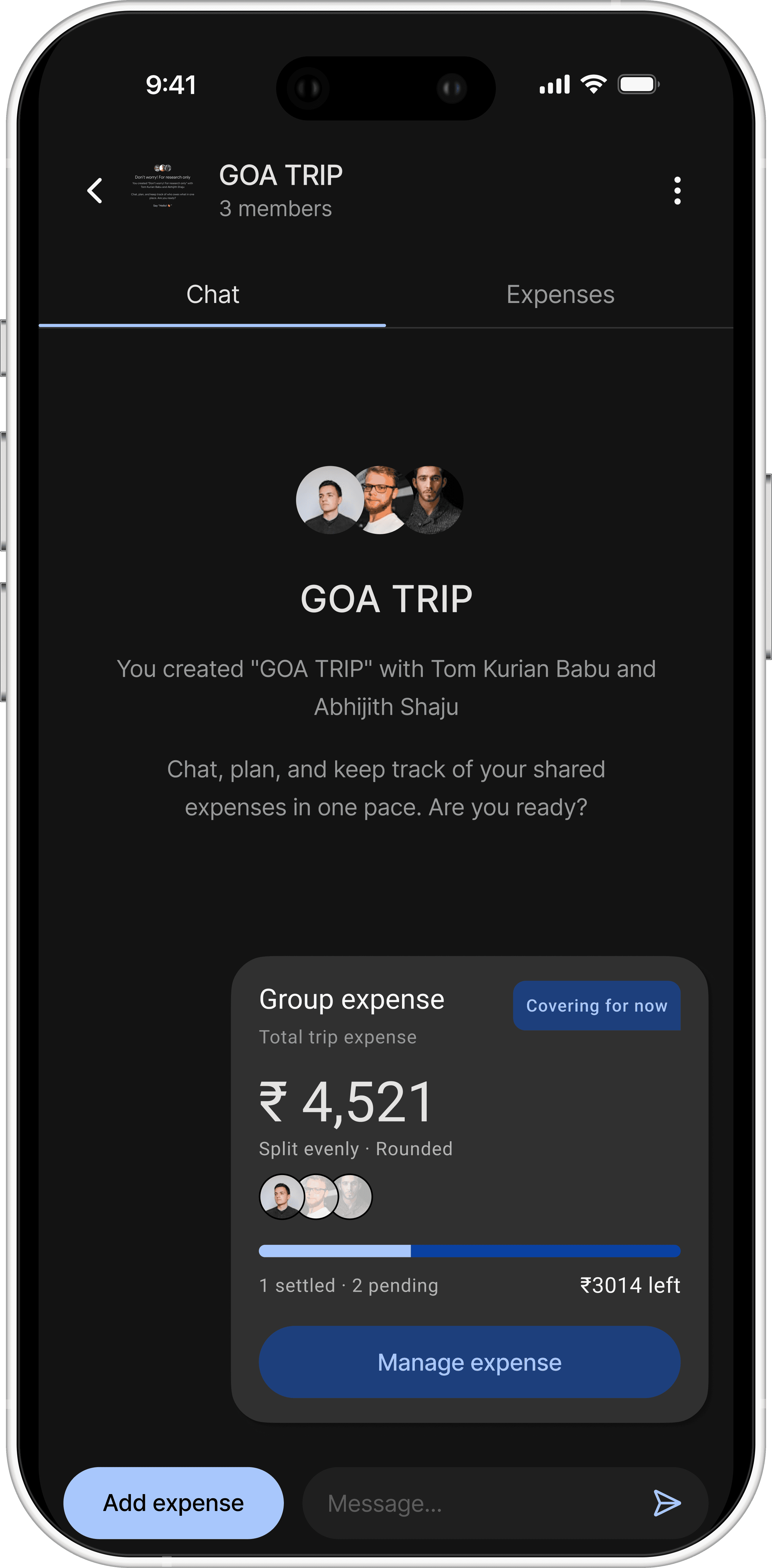
Split → Group Expense — small word change, completely different feeling
Pay Now → View Expense — takes the pressure off the notification
Intent tags at creation — Covering for now / Treat / Settle later. Say why you paid so nobody has to guess.
Research
Groups that handle money well manage comfort, not just math
Key Design Decisions
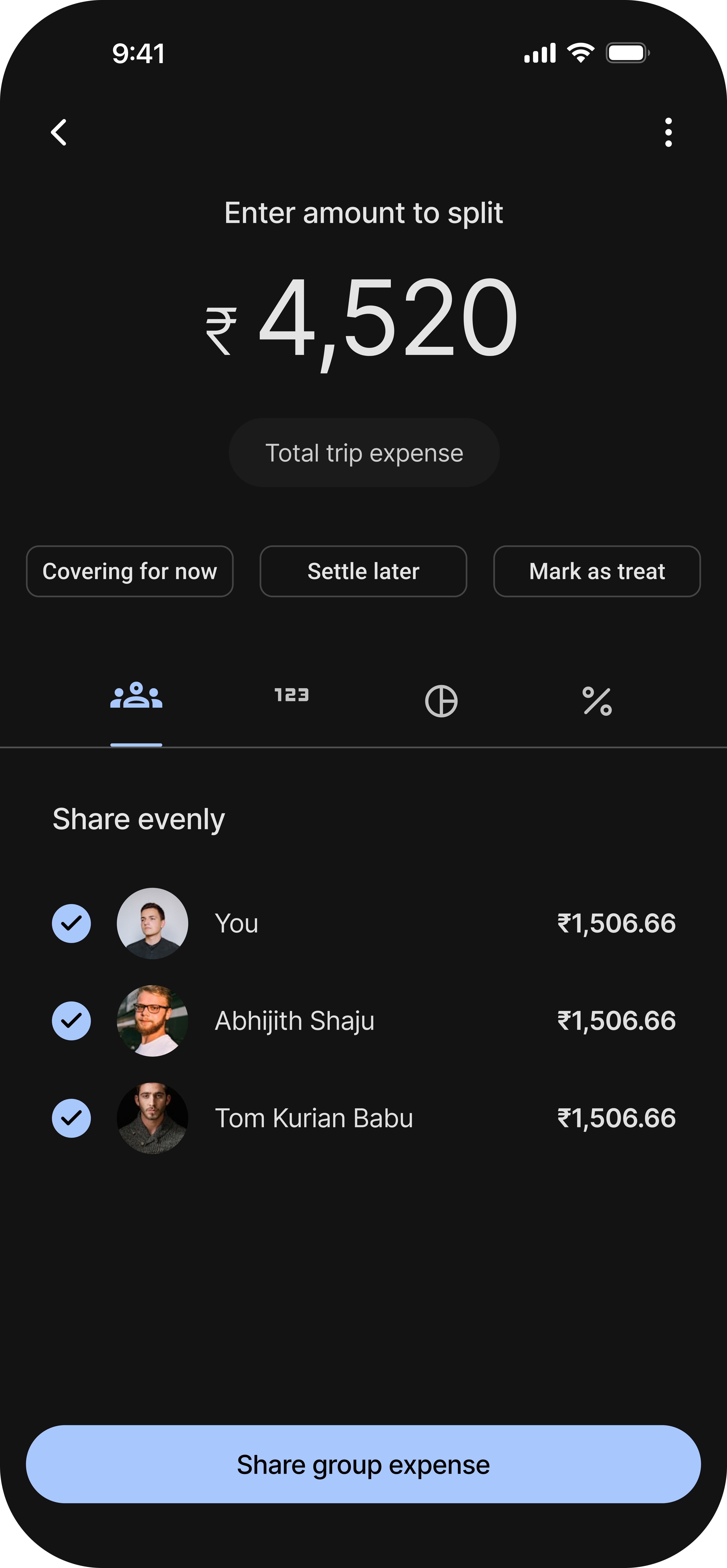
Intent-based split creation
When logging an expense, users explicitly select intent:
Covering for now
Settle later
Treat / Gift
This removes ambiguity and reduces anxiety without enforcing immediate repayment.


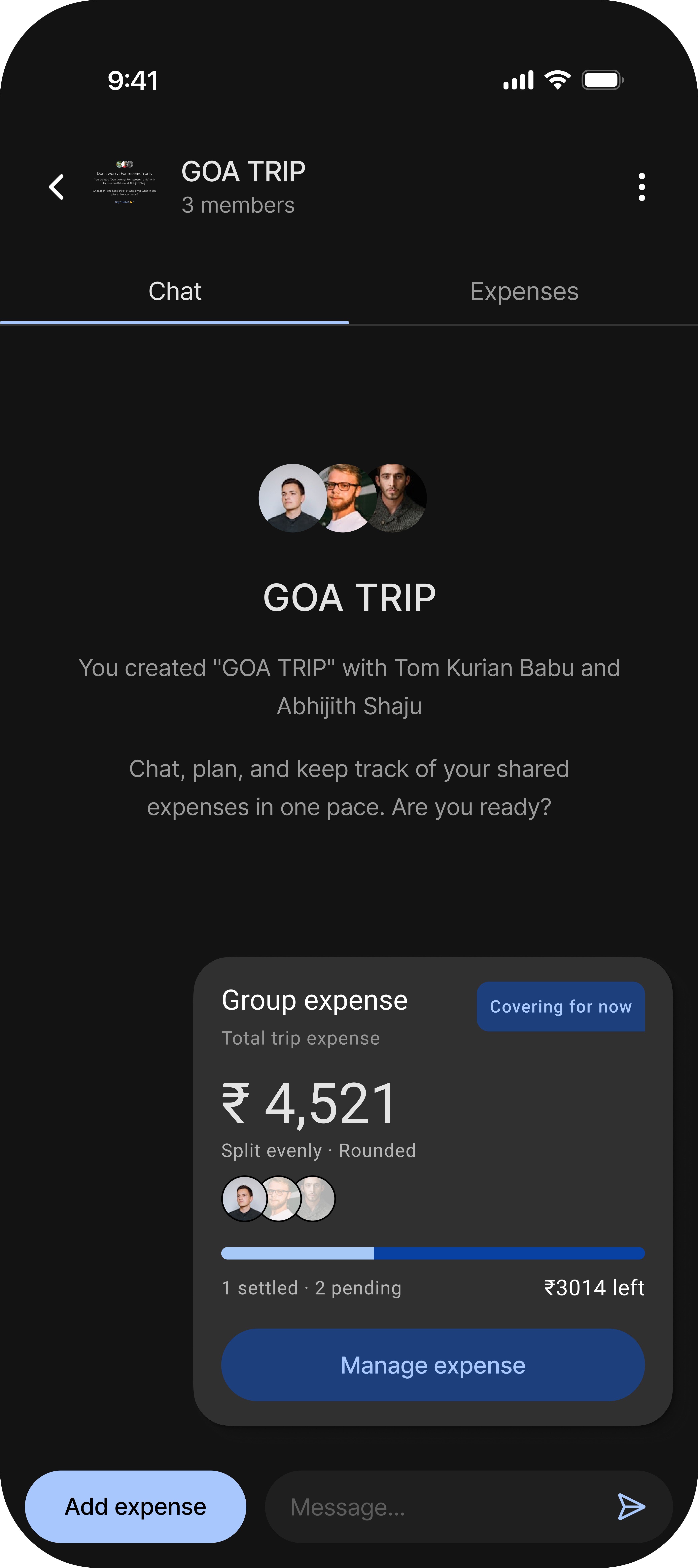
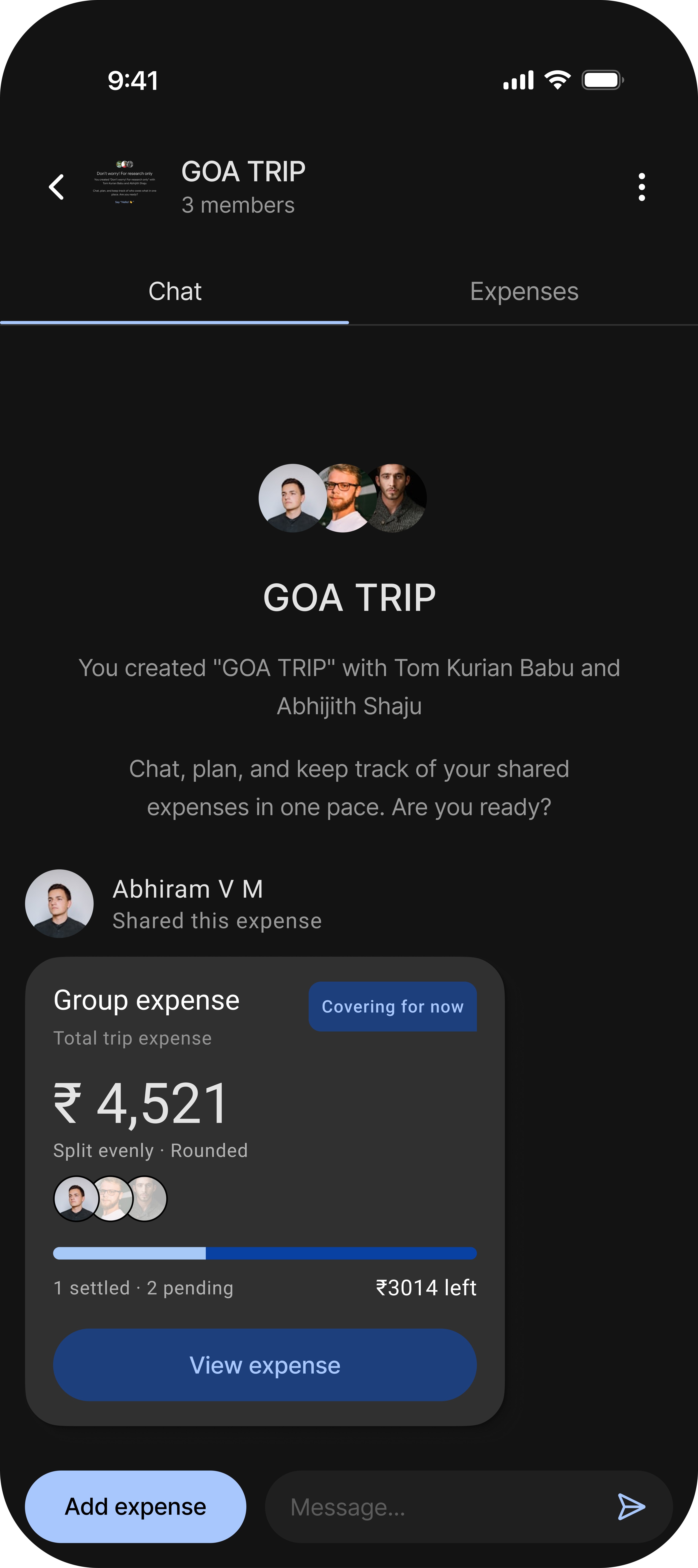
Status-driven expense cards
Expense cards communicate context and progress, not demand.
“Group expense added” replaces “Split request”
Collective progress is shown instead of individual callouts
No immediate payment CTA
This shifts the tone from asking for money to tracking shared context.
SENDER'S VIEW
Sender's View
RECEIVERS' VIEW
Receiver's View
Soft, user-triggered updates (not hard reminders)
Users can trigger an “Update expense status” action.
Notifications appear system-initiated
No names, no “you owe”
No urgency language
This preserves accountability while removing interpersonal pressure.
BEFORE
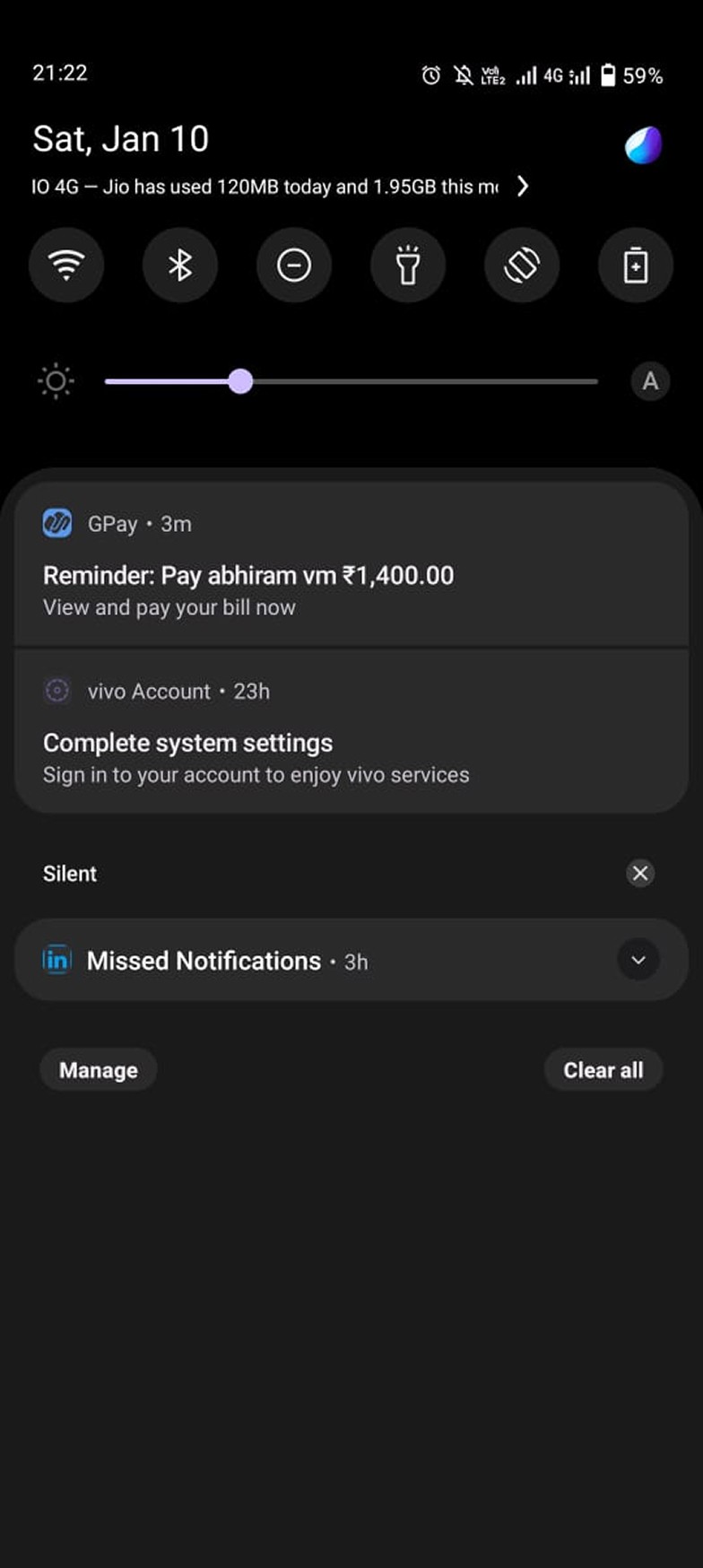
Before
AFTER

After
Constraints & Future Scope
Designing within real system limits
Current UPI flows restrict manual amount editing during payment. The design surfaces partial settlement intent clearly within this constraint, while identifying an opportunity for future enhancement.
Future opportunity
Editable settlement amounts in UPI flows
Auto-adjustment of remaining balances
This would reduce off-platform leakage and better match real payment behavior.
Impact
Designing for relationships, not just receipts
Expected outcomes
Higher expense logging rates
Reduced reminder fatigue
Faster settlement completion
Increased in-app transaction retention
By shifting responsibility for awkward moments from users to the system, shared expenses can be resolved naturally — without damaging relationships.
Closing Note
Shared expenses aren’t a financial problem: they’re a social co-ordination problem.
This redesign shows how thoughtful product decisions around intent, timing, and tone can transform a routine money flow into a calmer, more human experience.

Let's have a chat
Say Hi
Say Hi